In novels and films, characters are defined by their words and actions on screen. The audience watches them from a distance.
But in video games, the dynamic shifts completely. The character is not merely a subject to be observed; they are an avatar of player agency. The player step-shifts into their skin, makes their choices, and executes their movements.
Therefore, creating a great video game character requires more than just writing a cool backstory or sketching a striking visual design. It requires a systems design approach where a character's narrative motivations are perfectly aligned with the mechanical loops of the gameplay.
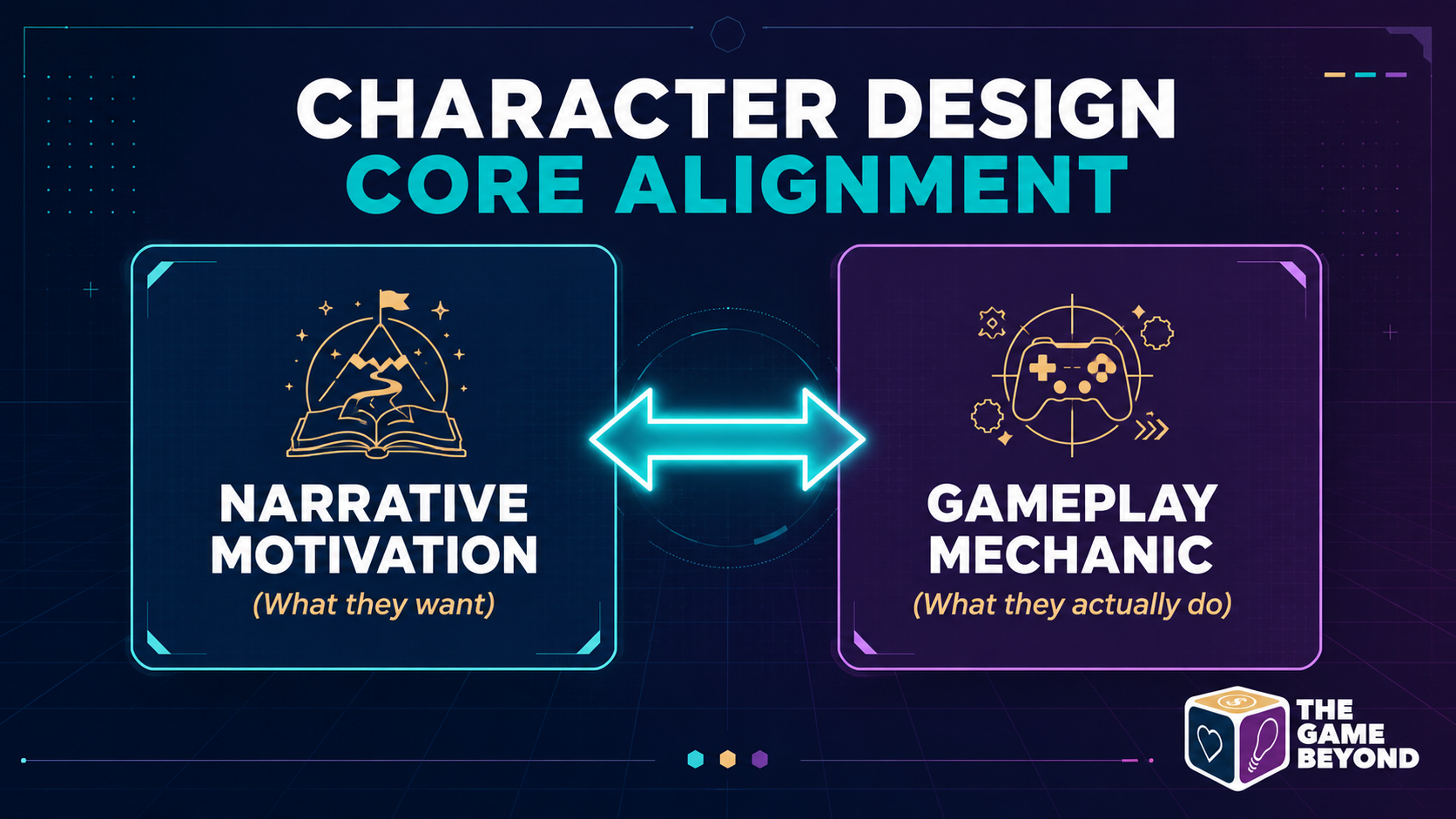
If these two elements are misaligned, you fall victim to Ludonarrative Dissonance—where your story tells the player one thing, but your mechanics force them to do the exact opposite.
Step 1: Align Motivation with Mechanics
The greatest mistake in beginner character design is decoupling story from play. For example:
The Story: Your character is a pacifist scholar searching for ancient secrets.
The Gameplay: The player must slaughter hundreds of guards to reach the library.
This lazy design immediately shatters immersion. To create an iconic character, their central narrative desire must be the direct driver of the core gameplay loop.
Consider Empathy-Driven Mechanics:
If your character’s narrative goal is to protect someone, your mechanics should reflect that vulnerability. In The Last of Us, Joel's mechanics shift from aggressive, self-preservation stealth to defensive, protective tactical play when Ellie is in danger. The mechanic forces the player to feel the anxiety of a protector.
Step 2: Use "Mechanic As Metaphor"
The actions you permit your player to perform are the ultimate expression of your character's personality.
Let's model the relationship between character state and gameplay mechanics. Suppose a character’s stress level (S) scales based on environmental factors. We can mathematically tie their mechanical precision (P) and reload time (Tr) to this state:
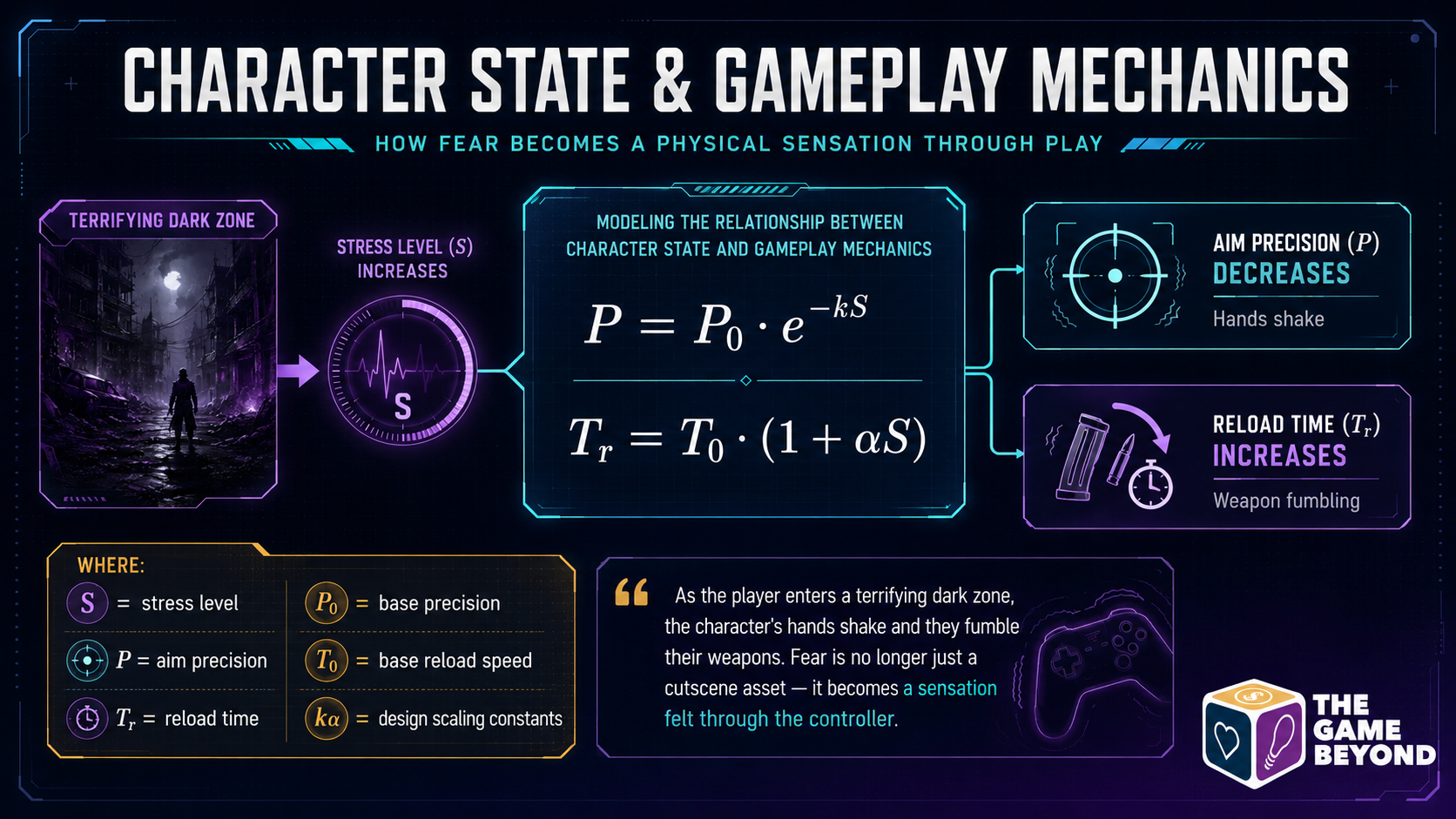
Where:
is base precision, is base reload speed.
and are design scaling constants.
As the player enters a terrifying, dark zone, the character's hands shake (reducing aim precision ) and they fumble their weapons (increasing reload time ). Suddenly, character fear isn't just a cutscene asset; it is a physical sensation felt through the controller.
Step 3: Design Affordances Into Character Visuals
Your character's visual silhouette must act as a clear map of their functional abilities. In design, we call this visual affordance.
If a character is incredibly fast and agile, they should have lightweight, streamlined clothing, athletic posture, and clear glowing accents that trace their path of movement.
Avoid the classic trap of lazy sexualization (e.g., heavily armored men vs. women in metal bikinis). When a game’s mechanics require heavy tactical protection, but the female avatar is visually exposed, the design communicates a mechanical lie to the player, shattering functional readability.
Step 4: Craft Emotional Stakes Through Interactive Choice
A character becomes unforgettable when the player has to make difficult, complex choices on their behalf. These choices should never be binary, cartoonish "good vs. evil" options (e.g., Save the village vs. Burn the village).
Instead, craft Invisible Choices:
Force the player to balance two competing, valid values (e.g., Protecting a close friend vs. Securing the safety of a larger community).
The choice should not immediately announce its long-term systemic consequences on a menu screen. Let the outcome unfold naturally through the world's systemic response.
Start Crafting Your Avatars
Are you ready to design characters that leap off the screen and resonate deeply with players? Stop guessing and start structuring your design like a professional.
We’ve created an advanced Character Forge Worksheet inside our Free Game Design Starter Kit—specifically built to help you align narrative motivations, physical visual affordances, and behavioral mechanics in under 20 minutes.