Every storyteller uses archetypes. From ancient mythologies to modern blockbusters, certain recurring patterns of personality help audiences immediately understand a character's role in a story.
In video games, archetypes are even more powerful because they establish mechanical expectations. When a player sees a massive, muscle-bound character carrying a steel shield, they don't need a tutorial to know this character is a slow, high-defense "tank."
However, relying too heavily on classic tropes leads to predictable, boring design. The secret to legendary character design lies in using archetypes to build expectations, then subverting them to shock the player.
The Core Gameplay Archetypes
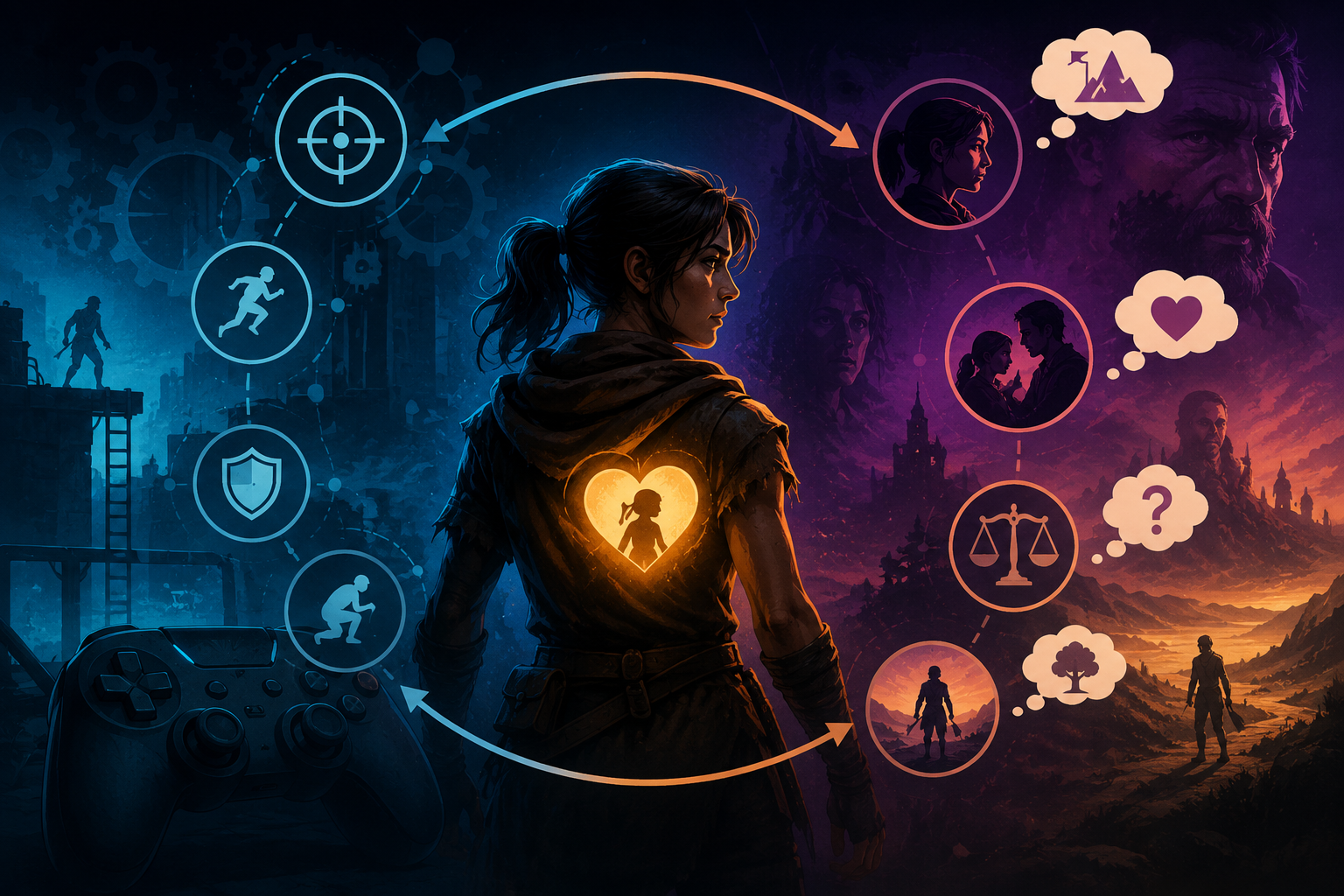
Let’s look at how narrative archetypes map directly to mechanical behaviors:
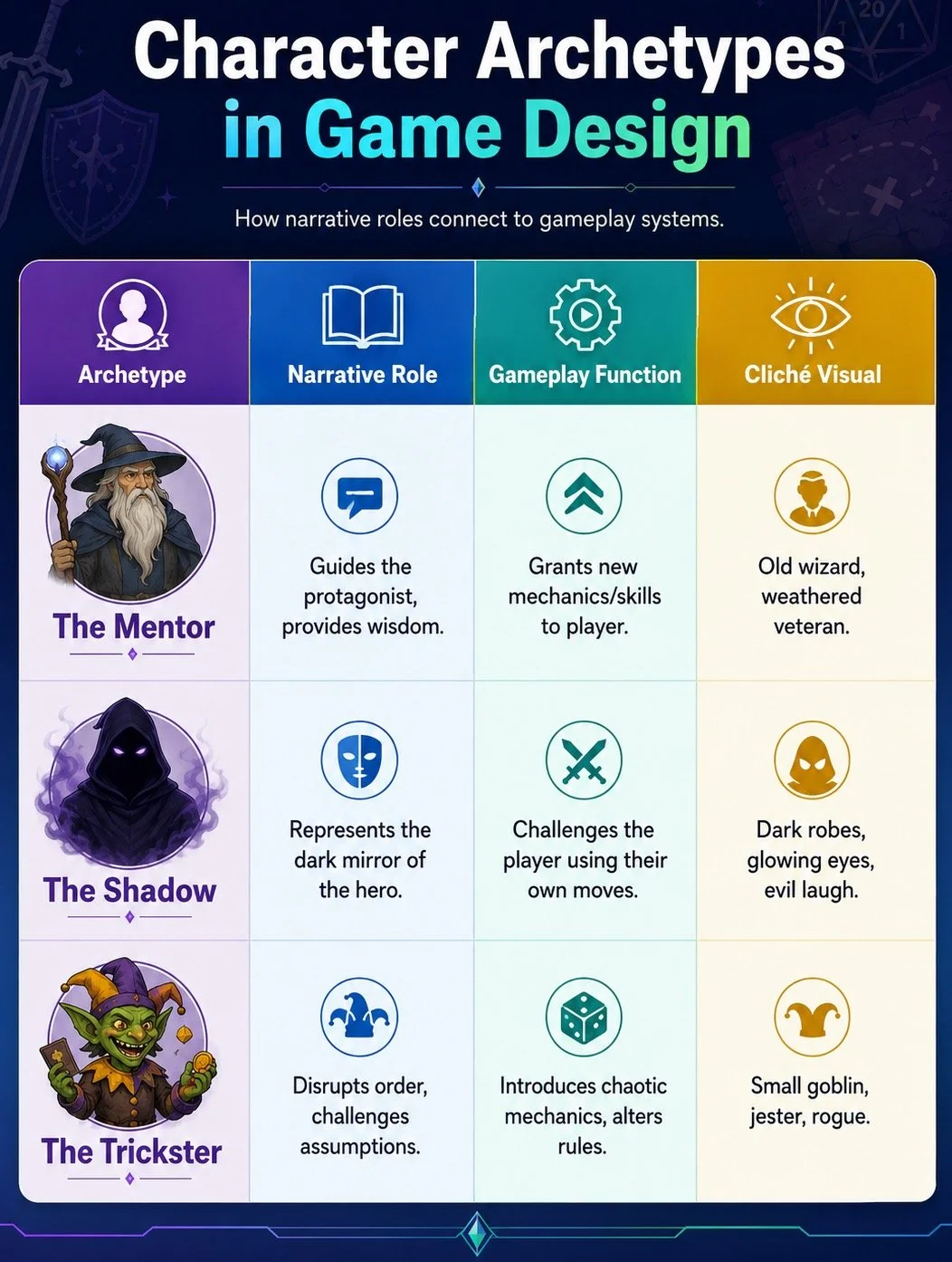
How to Subvert the Trope
Subversion isn't just about changing an aesthetic paint job (e.g., "What if the old wizard was a teenager?"). True subversion aligns the visual twist with a mechanical and behavioral shift.
Subverting "The Mentor"
Instead of a wise, untouchable master who safely trains you from the sidelines, what if the Mentor is highly flawed, traumatized, and mechanically dependent on the player?
The Subversion: In The Last of Us, Joel is nominally the survival mentor, but his physical limitations and emotional trauma force the player (acting as Ellie) to step up, protect him, and mechanically salvage resources to keep him alive.
Subverting "The Shadow"
The "Evil Clone" is a tired trope. To subvert the Shadow, make their mechanically hostile actions a logical, system-driven response to how the player has behaved.
The Subversion: What if the enemy mirrors the player's worst tactical habits? If the player has relied on mindless, aggressive shooting, the Shadow adapts by deploying ruthless traps and defensive counter-plays, forcing the player to confront their own mechanical flaws.
Design Unforgettable Heroes
Building characters that feel both familiar and refreshingly unique is a delicate science. To master this balance on your next project, download our free Game Design Starter Kit, featuring character archetype blueprints and subversion brainstorming worksheets.