In game design, a system is never static. Every action a player takes changes the state of the world, which in turn alters the player's next set of choices. This relationship is managed through Feedback Loops.
Understanding how to construct and balance feedback loops is the secret to pacing, difficulty curves, and keeping players in a state of flow—the perfect cognitive zone between anxiety (too hard) and boredom (too easy).
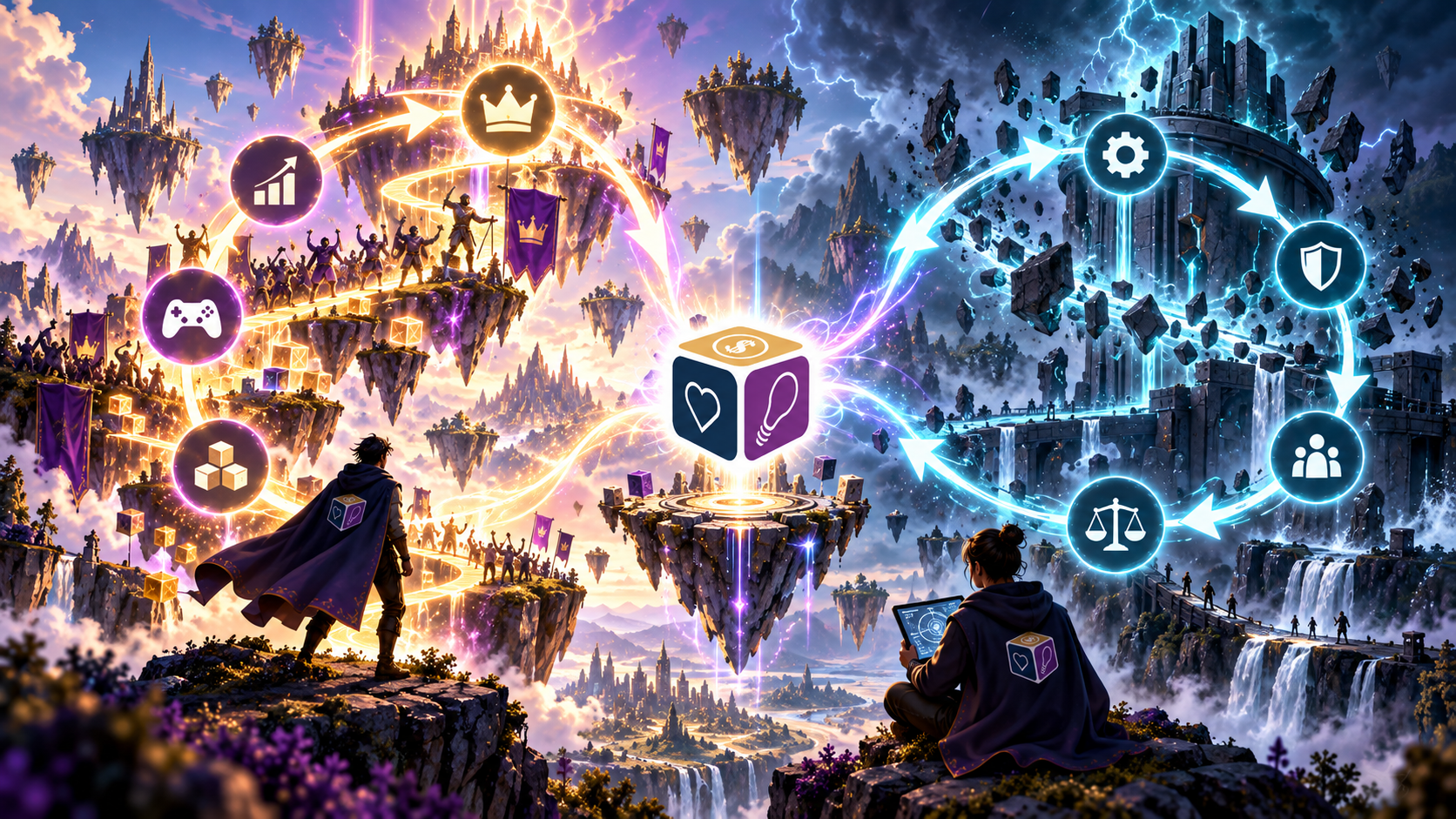
POSITIVE LOOP (Snowballing)
Player Wins ──> Gets Better Gear
▲
└─────────┘
(Incentivizes Dominance)
NEGATIVE LOOP (Self-Balancing)
Player Wins ──> Enemies Adapt
▲
└─────────┘
(Preserves Tight Challenge)
1. Positive Feedback Loops (The Snowball Effect)
A positive feedback loop is a self-reinforcing system. An early success leads to greater advantages, which makes subsequent success even easier to achieve.
Example: In a strategy game, capturing a resource node grants you more resources, allowing you to build a larger army, which makes capturing the next node effortless.
Design Risk: Runaway leaders. If a player gains an early lead, the game becomes trivial for them and utterly hopeless for their opponents, destroying the aesthetic of challenge.
2. Negative Feedback Loops (The Rubber-Band Effect)
A negative feedback loop is a self-correcting system. An action triggers forces that counteract the direction of change, pushing the system back toward balance.
Example: In Mario Kart, players in last place receive high-tier items (like the Blue Shell), while players in first place receive basic defensive items.
Design Risk: Artificial fairness. If overused, players will feel their skill doesn't matter because the system will always drag them back to the center.
Achieving Dynamic Balance
The hallmark of a great designer is using these loops in harmony. You deploy positive loops to reward skill and create satisfying moments of power, and integrate subtle negative loops to keep games challenging and competitive until the final seconds.
Master Your System Pacing
Learn how to structure your game's economy and progression without losing sight of the player. Start with our Free Game Design Starter Kit to organize the core system, then explore The Serious Game Design School for deeper systems-design frameworks.