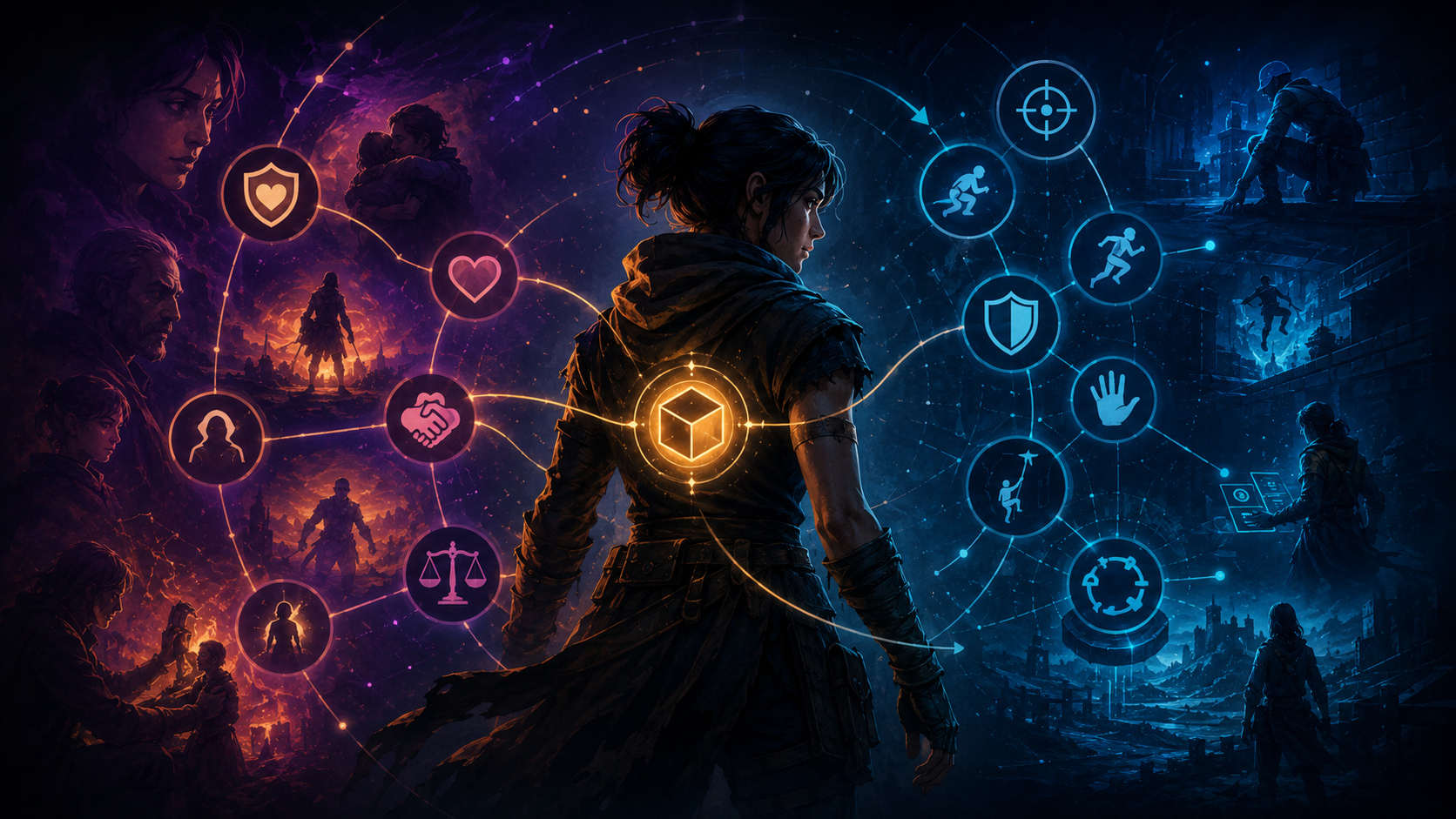

Building an interactive world is incredibly difficult. Unlike a film director, a game designer cannot control exactly where the audience looks or when they choose to explore.
Because of this lack of linear control, many beginner developers fall into classic structural traps that shatter player immersion and waste development resources.
Here are the three most common worldbuilding mistakes and how to fix them.
Mistake 1: Relying on Passive Lore-Dumps
The Problem: The player finds a scroll containing five pages of historical text about a king who died three centuries ago. They click out of it immediately to return to the combat loop.
The Fix: Translate history into physical environment state. If a king was a ruthless tyrant, do not write a book about it. Show the player a massive, crumbling obsidian monument built with slave labor, surrounded by dry farmland and ruined irrigation channels. Let the player climb the monument to discover a hidden cache of survival resources.
Mistake 2: Ludonarrative Dissonance in World Layout
The Problem: The story claims the town is under siege and completely isolated from resources. However, the town's market is pristine, and merchants are selling unlimited, high-tier armor from other continents.
The Fix: Align the physical layout and local economies with your narrative state. If a city is under siege, block off the main trade gates, replace luxury goods with low-tier emergency supplies, and make prices skyrocket.
Mistake 3: Visual and Structural Clutter (Visual Noise)
The Problem: The environment is packed with highly detailed, photorealistic visual assets, but the player has no idea which doors can be opened, which boxes can be smashed, or where the actual level boundaries end.
The Fix: Establish a strict, functional color and shape language. Ensure all interactive elements feature clear, consistent visual cues (such as glowing physical accents, unique materials, or specific lighting angles) that separate them from static background decorations.
Create Immersive Worlds
Take control of your world design before you build. Start with our Free Game Design Starter Kit to organize the core goals, rules, players, feedback, and narrative behind your game concept before you invest heavily in production.