What Is a Game Design Document (GDD) and Why Do You Need It?
You have a killer idea for a game. You can picture the characters, the main boss, and the cool weapons. You're ready to open up Unity or Unreal and start building.
Stop.
Before you do anything else, you need to write it down.
In the game industry, starting a project without a Game Design Document (GDD) is like attempting to hike across an uncharted jungle without a compass. You might survive for a little while, but eventually, you will get lost, run out of steam, and give up.
Let’s talk about what a GDD actually is, and why it is the ultimate survival tool for game creators.
Defining the GDD: The Game Designer's Blueprint
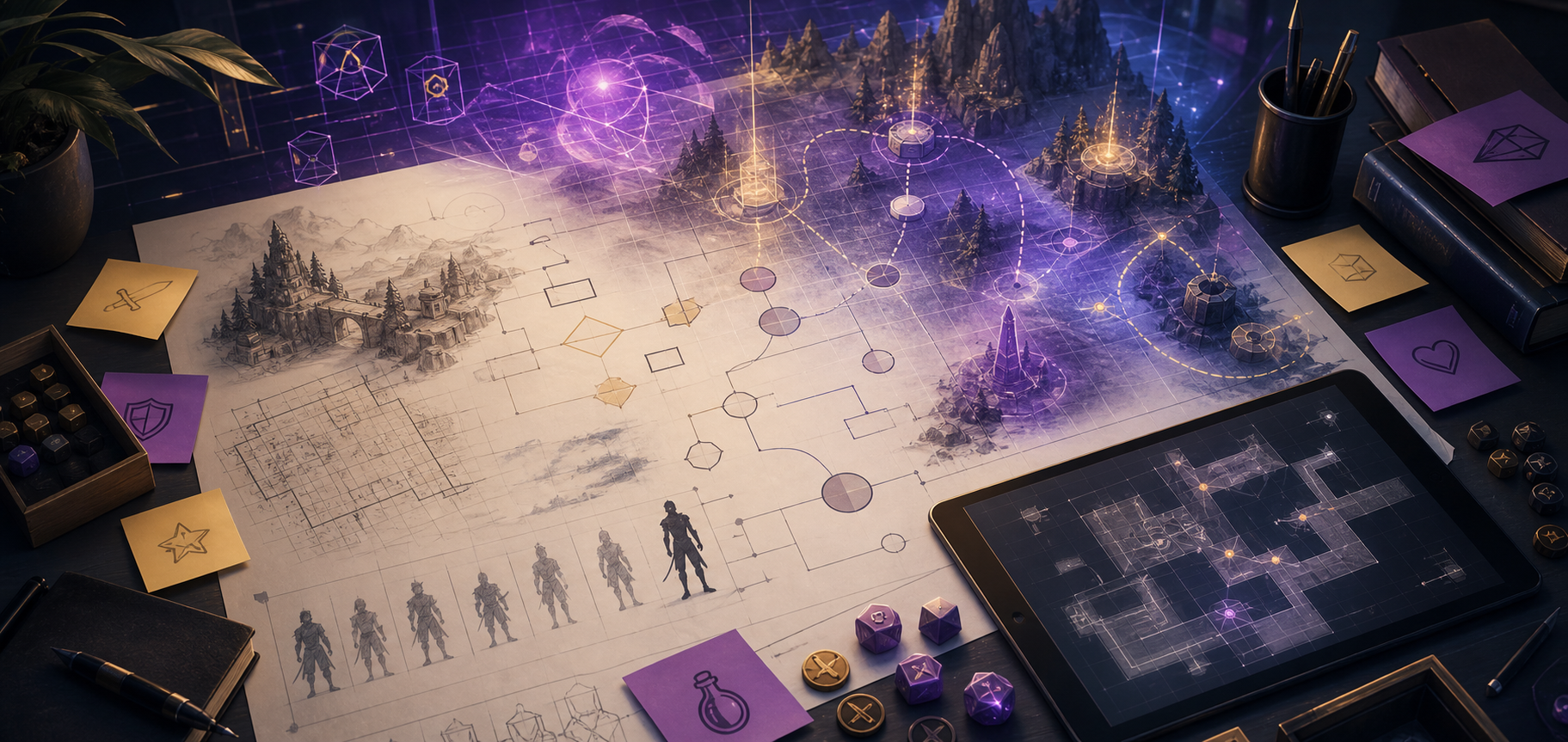
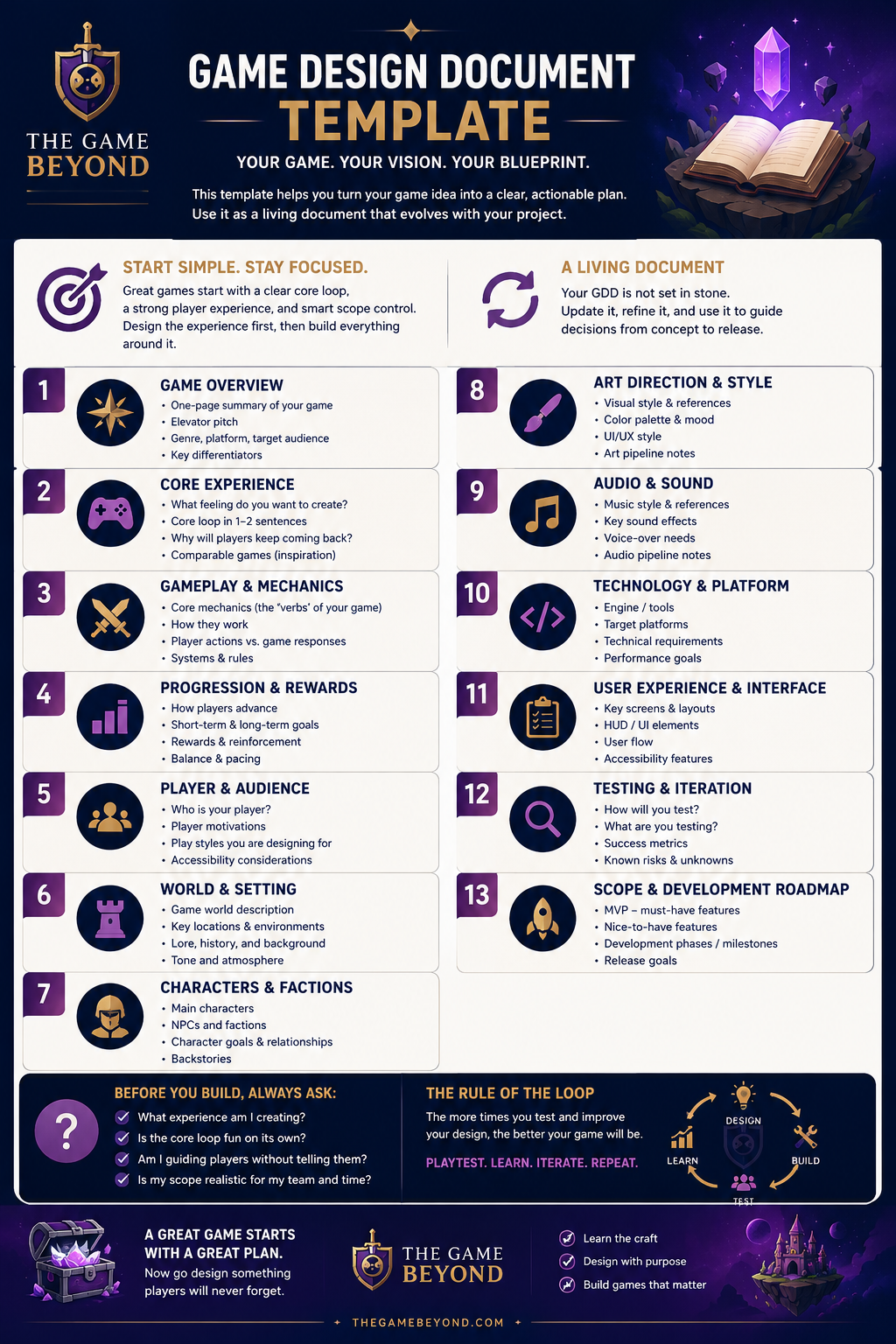
At its simplest, a Game Design Document is a single source of truth for your project. It acts as an interactive blueprint that outlines your game’s mechanics, story, art direction, user interface, and level flow.
But don’t mistake a GDD for a dry, boring academic text. A great GDD is:
Visual: Filled with reference art, flowcharts of mechanics, and level maps.
Living: Frequently updated to reflect changes made during actual playtesting.
Actionable: Written in a clear way that tells programmers and artists exactly what to build.
Why You Absolutely Need a GDD
1. It Kills "Scope Creep"
Scope creep is the slow, silent killer of indie games. It's when you start making a simple retro platformer, but continuously add features until you're trying to build a massive MMO.
When you write a GDD, you define the boundaries of your game. If a new idea doesn't fit the scope or goals outlined in your document, it gets pushed to a sequel or discarded entirely.
2. It Aligns Your Team
If you are working with a team, everyone has a slightly different mental image of the game. An artist might be picturing a dark, gritty sci-fi shooter, while the programmer is building a lighthearted arcade game.
The GDD aligns everyone. It ensures that everyone is pulling in the same direction, saving hundreds of hours of wasted work.
3. It Highlights Flaws Before You Code
It is incredibly easy to delete three sentences of text in a GDD. It is incredibly difficult to delete thousands of lines of complex code.
By writing out exactly how your mechanics, economics, and progression loops work, you can spot logical flaws, contradictions, and balance issues before spending weeks programming them.
Ready to start planning your game like a professional? Skip the confusion and start structured with our Free Game Design Document Template.