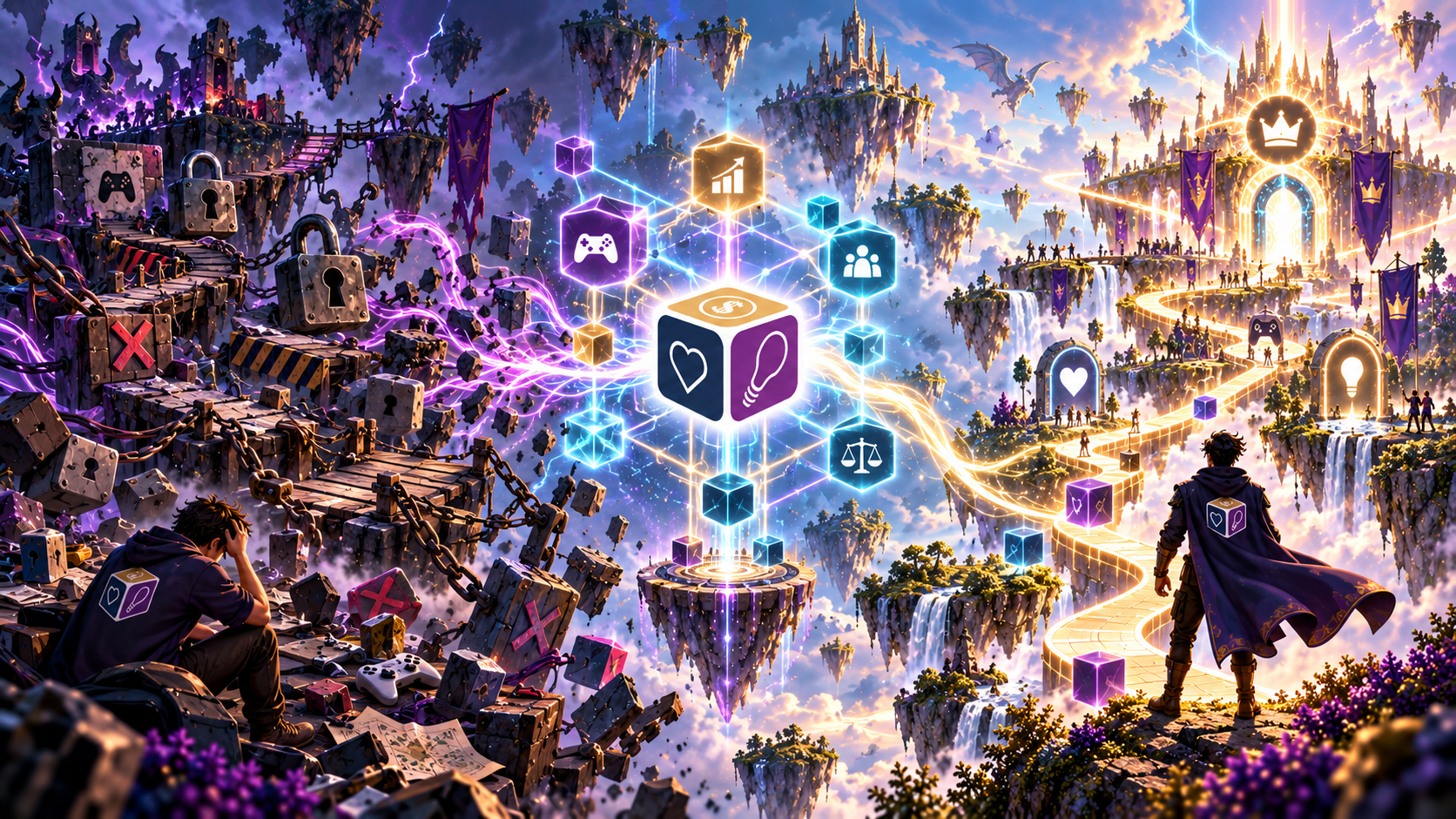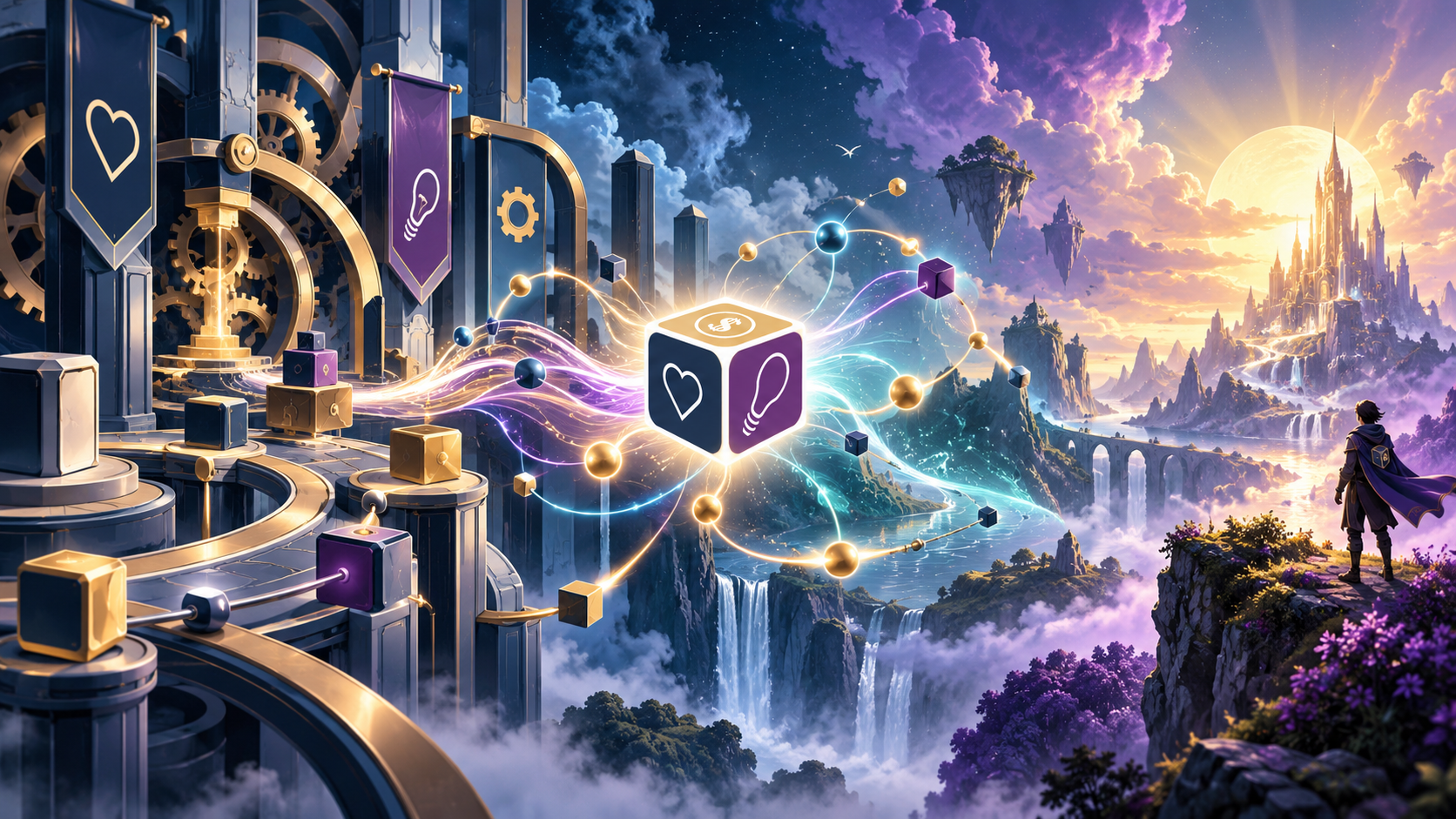
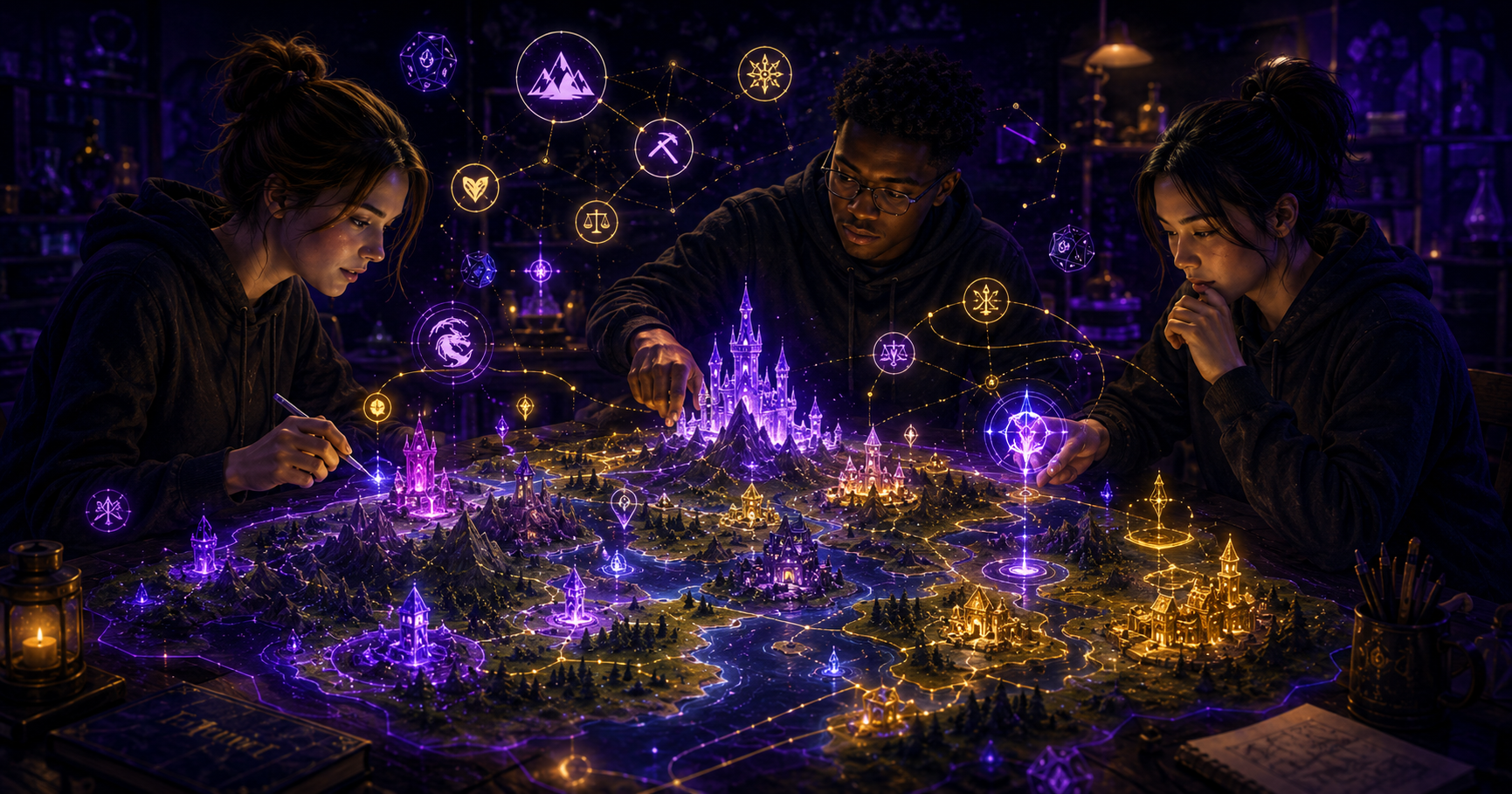
Most fantasy worldbuilding guides ask you to write about magic systems, mythological pantheons, and map borders. While these elements are crucial for novels, they do not tell a game programmer how the world should operate.
To design an interactive fantasy world, you must build systems of rules and resources.
Use this checklist to ensure your fantasy world functions as a dynamic system rather than a static lore dump.
Systemic Fantasy Checklist
Core Resource Loops
Identify what powers your magic and economy.
Faction Dynamics
Define how organizations compete for power.
Mechanical Magic
Turn mystical lore into physical constraints.
Environmental Clues
Map how ruins, terrain, and nature guide player movement.
1. The Resource and Magic Loop
✅ What is the central resource? What fuel, element, or magical substance drives the conflicts of your world?
✅ How is it processed? Does it require heavy industrial extraction (like oil) or delicate spiritual communion?
✅ How does this resource limit the player's capabilities? Tie your magic system directly to gameplay costs. If magic consumes a rare element, does casting a spell permanently degrade the surrounding environment or drain local player health?
2. The Power Balance (Dynamic Factions)
✅ Identify three distinct factions. What are their competing ideologies regarding the world's core resource?
✅ Determine the player's impact. How do the player's choices alter the balance of power? If a player helps Faction A secure a mine, how does Faction B’s mechanical behavior change toward the player in the open world?
3. Structural and Environmental Affordances
✅ Visual Theme Consistency: Do buildings, ruins, and natural landscapes utilize a coherent material language that indicates threat vs. safety?
✅ Navigation cues: How does the player identify paths without mini-maps? (e.g., specific moss grows only on north-facing climbable cliffs).
Prototype Your Fantasy Systems
Don't let your fantasy world remain trapped in a text document. Use our Free Game Design Starter Kit to start organizing your game concept as an interactive system and apply the five core design elements to your own idea.