AAA vs. Indie Game Design Documents: What’s the Difference?
How does a Game Design Document (GDD) for a massive, multi-million dollar game like The Witcher 3 or Grand Theft Auto VI differ from a GDD written by a solo indie developer in their bedroom?
The answer lies in scale, audience, and agility.
While both documents serve as the blueprint for an interactive experience, they are structured and utilized in completely different ways. Understanding these differences can help you determine the exact documentation style your project needs to succeed.
AAA Game Design Documents: The Wiki of a Thousand Pages
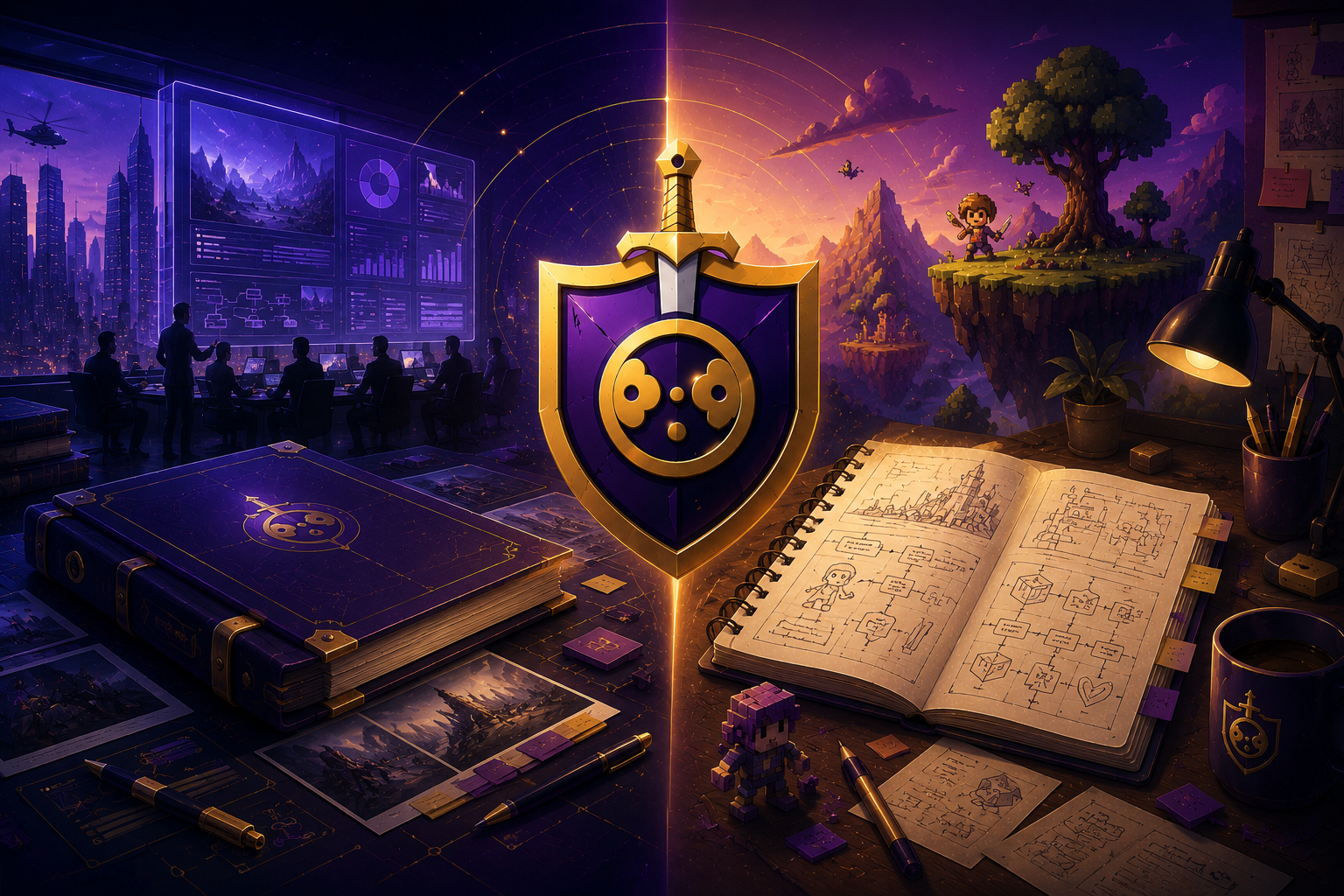
In a AAA studio, a team of several hundred developers is split across different departments, often located in different time zones. At this scale, communication is the single greatest bottleneck.
Therefore, AAA GDDs are massive. In fact, modern AAA studios rarely use a single document anymore. Instead, they build massive, internal, living wikis (using tools like Confluence or Notion).
[Main AAA Game Wiki]
├── Character Design Specs (50+ pages)
├── Combat Balancing Equations & Systems (100+ pages)
├── Level Design & Art Styles per Biome (200+ pages)
└── Core Engine Mechanics & Physics Formulas (150+ pages)
Every single feature, down to how fast a door swings open or how a player's foot conforms to uneven terrain, is documented down to the millimeter. This level of extreme detail ensures that an animator in Canada and a programmer in Japan are building the exact same feature.
Indie Game Design Documents: Clean, Agile, and Visual
Indie game development is fast-paced and relies heavily on rapid iteration. If you are a solo developer or a small team of five, writing a 500-page GDD is a massive waste of precious development time.
For indies, the goal of a GDD is clarity and agility.
An indie GDD should be concise—typically between 10 to 30 pages. It relies on:
Concept Art & Mood Boards: To communicate visual style instantly.
Flowcharts: To explain simple mechanical logic.
Player Journey Maps: Highlighting the key emotions and beats of the experience.
Instead of documenting every potential detail, an indie GDD serves as a strong guidepost, leaving room for spontaneous discoveries and shifts during early playtesting.
Which One is Right for You?
Unless you are running a studio with a budget of millions, do not attempt to write a AAA-style GDD. You will burn out before you ever write your first line of code.
Focus on creating an agile, clear, and highly visual GDD that sets strict constraints for your mechanics and world.
To help you hit the perfect sweet spot between detailed planning and creative freedom, we’ve developed a structured template modeled after successful indie game cycles. 👉 Download the Free Indie GDD Template